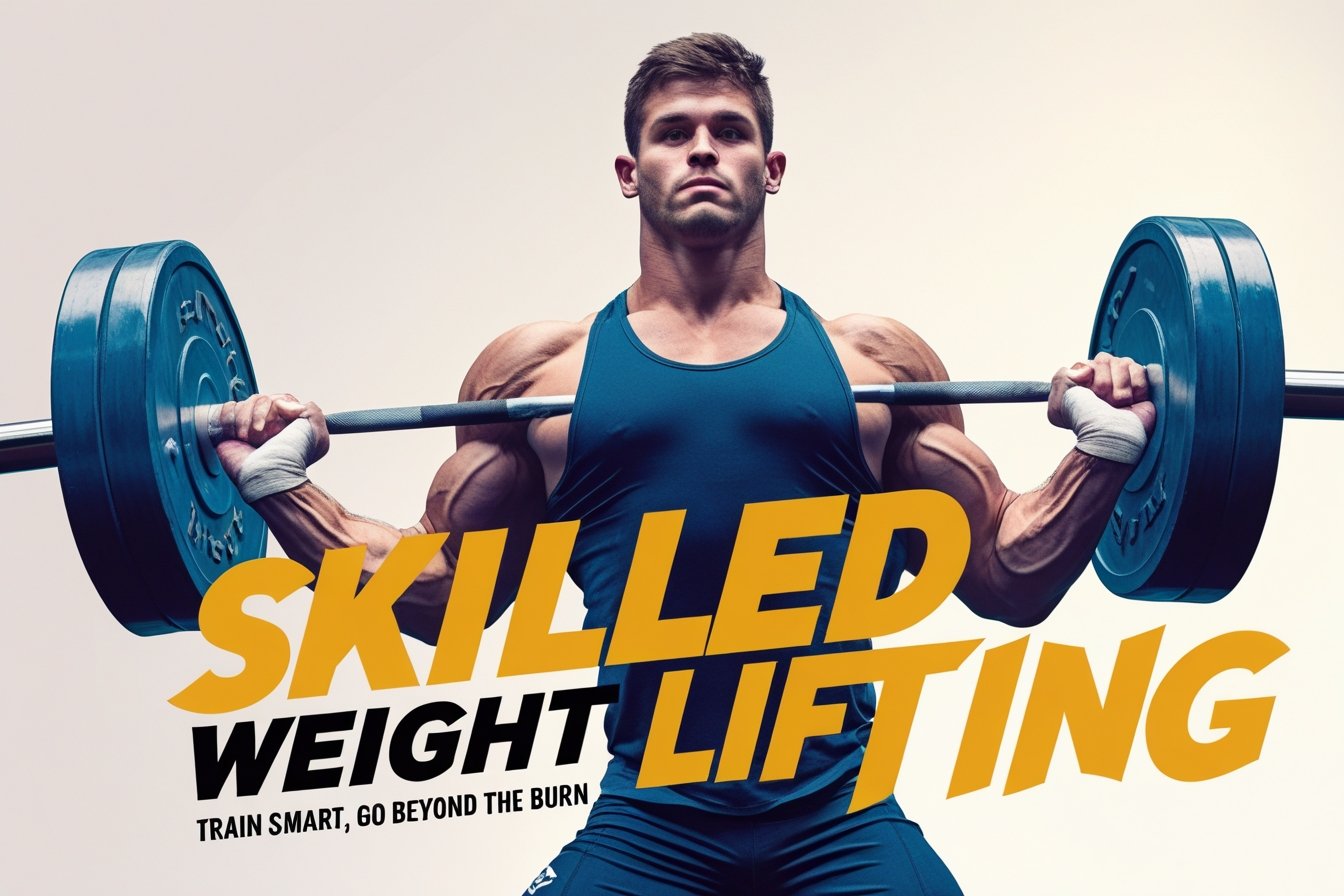
What if everything you thought you knew about weight lifting was keeping you from your true potential? Skilled weightlifting isn’t about grinding through endless sets until your muscles scream; it’s about mastering the art of intelligent movement that transforms your body with surgical precision.
Understanding Your Body’s Hidden Language:
Weight lifting becomes truly powerful when you understand that your muscles don’t work in isolation. Every successful lift is a complex conversation between your nervous system, muscles, and joints. Skilled lifters learn to listen to this conversation and direct it like a conductor leading an orchestra.
Your brain sends electrical signals through your spinal cord to activate specific muscle fibers. The more skilled you become, the more efficiently these signals travel. This is why experienced lifters can generate more force with what appears to be less effort. They’ve trained their nervous system to recruit muscle fibers in the optimal sequence, creating what exercise scientists call “intermuscular coordination.”
Progressive overload takes on new meaning when viewed through this lens. Instead of simply adding weight, skilled lifters progress by improving the quality of their neural drive. They focus on creating tension in the right muscles at the right time, turning each rep into a masterpiece of controlled movement.
The Art of Muscular Recruitment Patterns:
The difference between ordinary weight training and skilled lifting lies in timing. Your muscles don’t just turn on and off like light switches, they have sophisticated recruitment patterns that determine the success of every movement. Strength training experts now understand that the order in which muscles activate during a lift can make or break your results.
Take the deadlift, for example. Novice lifters often initiate the movement with their back muscles, creating a recipe for injury and inefficiency. Skilled weight lifters know to fire their glutes first, followed by their hamstrings, then their back muscles in a perfectly timed sequence. This creates a wave of force that travels through the body like a perfectly executed dance move.
Training smart means spending time on activation drills that teach your nervous system these optimal patterns. Simple exercises like glute bridges with pauses, or slow-motion squats with focus on muscle timing, can dramatically improve your lifting performance. These aren’t just warm-up exercises, they’re neural programming sessions that upgrade your movement software.
The Metabolic Precision Method:
Most people approach weight lifting with the mentality that more is always better. They chase the burn, believing that muscular fatigue equals progress. Skilled lifters understand that different energy systems respond to different training stimuli, and they use this knowledge to sculpt their physique with scientific precision.
Your muscles have three primary energy systems: the phosphocreatine system for explosive power, the glycolytic system for moderate intensity work, and the oxidative system for endurance. Smart training involves targeting each system strategically based on your goals. Want to build dense, powerful muscle? Focus on the phosphocreatine system with heavy, low-rep sets. Looking to improve muscle endurance and definition? The oxidative system responds best to lighter weights with longer time under tension.
Metabolic flexibility becomes your secret weapon when you understand how to switch between these systems within a single workout. Advanced lifters use techniques like cluster training, where they perform multiple mini-sets with short rests, allowing their phosphocreatine system to partially recover while still accumulating metabolic stress. This approach builds both strength and muscle mass more effectively than traditional straight sets.
The Hidden Network of Strength:
Weight lifting tradition focuses heavily on individual muscles, but skilled lifters understand that fascia, the connective tissue that wraps around muscles, plays a crucial role in force transmission and injury prevention. This network of tissue acts like a body-wide communication system, allowing force to transfer efficiently from one muscle group to another.
Strength training that incorporates fascial principles looks different from conventional approaches. Instead of isolating muscles, skilled lifters use movements that create long chains of tension through multiple fascial lines. A single-arm overhead press, for instance, creates tension from the pressing hand all the way down to the opposite foot, strengthening the entire fascial network.
Training methodology that respects fascial anatomy often involves multi-planar movements, unilateral exercises, and dynamic stretching integrated into lifting sessions. These approaches don’t just build muscle, they create resilient, integrated movement patterns that translate into real-world strength and athleticism.
Building Strength in the Spaces Between:
The most overlooked aspect of skilled weight lifting happens outside the gym. Your muscles don’t grow during workouts, they grow during recovery. Smart training involves orchestrating your recovery with the same precision you apply to your lifting technique.
Sleep quality directly impacts protein synthesis, the process through which your muscles rebuild stronger. Skilled lifters treat sleep like a performance enhancer, optimizing their sleep environment, maintaining consistent sleep schedules, and understanding that deep sleep stages are when growth hormone peaks.
Nutrition timing becomes an art form when you understand the windows of opportunity for muscle protein synthesis. The period immediately following your workout represents just one of many opportunities throughout the day to provide your muscles with the building blocks they need. Weight training results improve dramatically when you match nutrient timing to your body’s recovery rhythms.
Active recovery sessions, light movement that promotes blood flow without adding stress, accelerate the removal of metabolic waste products while delivering nutrients to recovering tissues. This might include gentle yoga, walking, or mobility work that keeps your body moving without disrupting the recovery process.
The Mental Game of Strength:
Weight lifting is as much a mental discipline as it is a physical one. Skilled lifters develop psychological strategies that allow them to tap into reserves of strength they didn’t know they possessed. This mental aspect of training is where many lifters leave significant gains on the table.
Visualization techniques used by elite athletes can dramatically improve lifting performance. By mentally rehearsing perfect lifts, you’re actually strengthening the neural pathways involved in the movement. Strength training sessions become more effective when you spend time visualizing successful lifts before you even touch the weight.
Breathing patterns directly influence your nervous system’s state during lifting. Skilled weight lifters use specific breathing techniques to either increase arousal for maximum effort lifts or promote relaxation for recovery between sets. The Valsalva maneuver, when used correctly, can increase intra-abdominal pressure and spinal stability for heavy lifts.
Mental cues replace generic motivation with specific, actionable commands that improve movement quality. Instead of thinking “lift heavy,” skilled lifters use cues like “drive through the floor” for deadlifts or “pull the bar apart” for bench press. These specific cues create immediate improvements in muscle activation and lifting technique.
Conclusion:
Skilled weight lifting transforms the gym from a place of mindless exertion into a laboratory for human performance. When you move beyond the burn and embrace intelligent training principles, every workout becomes an opportunity to refine your craft and unlock new levels of strength, muscle, and athleticism.
FAQs:
Q1: How long does it take to develop skilled weight lifting techniques?
A: Most lifters see noticeable improvements in movement quality within 4-6 weeks of focused practice.
Q2: Can beginners start with skilled weight lifting principles?
A: Absolutely—starting with proper technique and neural training creates better habits from day one.
Q3: Do I need special equipment for skilled weight lifting?
A: No, these principles apply to any weight training equipment, from barbells to dumbbells to machines.
Q4: How often should I practice activation drills?
A: Daily activation work for 10-15 minutes dramatically improves lifting performance and injury prevention.
Q5: Is skilled weight lifting better than traditional bodybuilding?
A: It’s not better or worse—it’s a more precise approach that can enhance any training style.
Q6: Will skilled weight lifting help me lift heavier weights?
A: Yes, improved neural efficiency and movement patterns typically lead to significant strength gains.