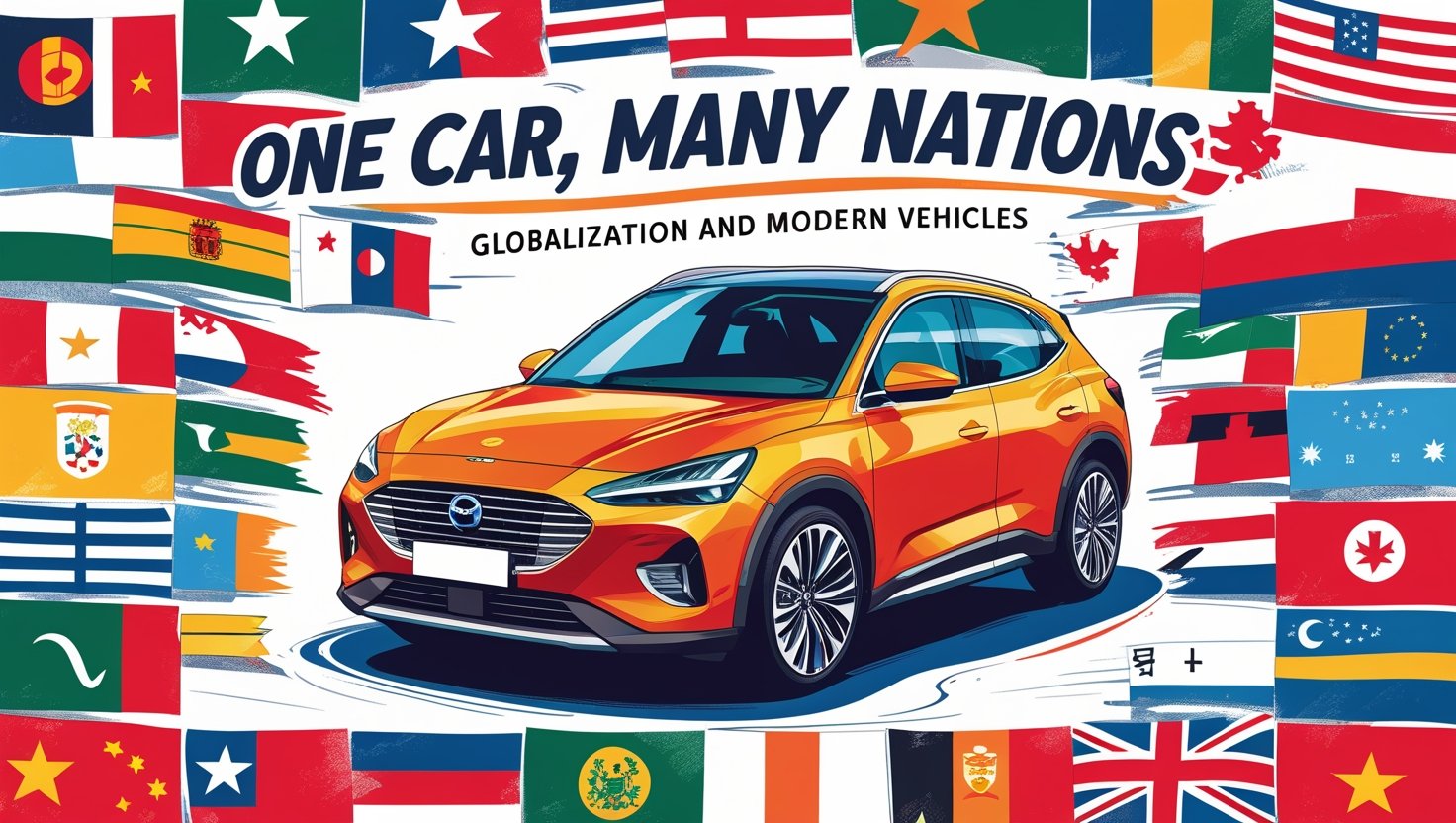
Your morning commute begins with turning a key manufactured in South Korea, starting an engine assembled in Mexico, using steel from India, and electronics from China, all within a vehicle branded as “American-made.” This remarkable reality exemplifies how globalization and modern vehicles have created an interconnected automotive ecosystem where a single car represents the collaborative effort of dozens of nations working in perfect harmony.
The Invisible Passport: A Car’s Global Journey:
Deconstructing the Modern Automobile’s DNA:
Every modern vehicle tells a fascinating story of international cooperation that remains invisible to most drivers. The average car contains components from over 30 different countries, creating what industry experts call the “automotive United Nations.” This intricate global supply chain transforms raw materials into sophisticated transportation machines through a carefully orchestrated international ballet.
China leads global motor vehicle production, manufacturing over 30 million cars and commercial vehicles annually, yet even Chinese-assembled vehicles depend heavily on international components. German precision engineering meets Japanese reliability standards, while American innovation combines with Korean manufacturing efficiency to create vehicles that transcend national boundaries.
The complexity of this system becomes apparent when examining something as simple as a car door. The steel might originate from Brazilian mines, get processed in Chinese mills, be formed into components in Mexican factories, combined with German-designed locks, Japanese electronics, and Italian leather, before final assembly in American or European plants.
The Symphony of International Collaboration:
Automotive globalization operates like a massive symphony where each nation plays its specialized instrument. Germany contributes precision engineering and luxury components, Japan provides reliability and efficiency innovations, South Korea delivers cost-effective electronics, while China offers manufacturing scale and emerging technology integration.
This specialization creates extraordinary efficiency gains that benefit consumers worldwide. Countries focus on their competitive advantages, whether that’s advanced materials science, manufacturing expertise, design innovation, or cost-effective production capabilities. The result is vehicles that combine the best attributes from multiple nations into single, coherent products.
The globalization of the automotive industry has evolved beyond simple cost reduction to encompass innovation sharing, technology transfer, and collaborative research and development. Modern automotive partnerships span continents, creating knowledge networks that accelerate technological advancement and improve vehicle quality globally.
How Global Markets Shape Your Vehicle:
Supply Chain Orchestration Mastery:
Global automotive supply chains operate with clockwork precision that rivals the most sophisticated logistics operations in human history. Components travel thousands of miles through multiple countries before reaching final assembly plants, yet arrive exactly when needed to maintain production schedules.
This “just-in-time” manufacturing philosophy minimizes inventory costs while maximizing efficiency. A disruption in any single country can affect vehicle production worldwide, demonstrating the interconnected nature of modern automotive manufacturing. The system’s complexity requires constant monitoring and adjustment to maintain optimal flow.
Modern automakers manage supplier networks spanning dozens of countries simultaneously. Each supplier specializes in specific components, creating expertise clusters that drive innovation and quality improvements. This distributed approach allows manufacturers to leverage global talent and resources while maintaining competitive pricing.
Currency Fluctuations and Manufacturing Decisions:
International automotive economics involves constant adaptation to currency fluctuations, trade policies, and economic conditions across multiple nations. Manufacturers strategically locate production facilities to optimize costs, access markets, and hedge against economic uncertainties.
Exchange rate movements can dramatically affect component sourcing decisions. A stronger dollar might make American parts more expensive for European manufacturers, while currency devaluation in emerging markets can create new sourcing opportunities. These economic forces continuously reshape the global automotive landscape.
Trade agreements and tariff structures significantly influence manufacturing location decisions. Free trade zones and preferential trade agreements create economic incentives that drive facility placement and supply chain optimization strategies across different regions.
Cultural Fusion on Four Wheels:
Design Philosophy Convergence:
Modern vehicle design reflects a fascinating convergence of cultural preferences and engineering philosophies from around the world. European emphasis on performance and luxury merges with American preferences for size and convenience, while Asian focus on efficiency and reliability creates vehicles that appeal to global markets.
This cultural synthesis produces cars that feel familiar to drivers regardless of their national origin. Interior layouts balance German precision with American spaciousness, while exterior styling combines Italian flair with Japanese functionality. The result is automotive design that transcends cultural boundaries.
Regional preferences still influence specific market adaptations. Vehicles sold in Europe prioritize fuel efficiency and compact dimensions, while American markets favor larger vehicles with powerful engines. Asian markets often emphasize technology integration and urban maneuverability, creating diverse product variations from common global platforms.
Technology Transfer Acceleration:
Cross-border technology sharing accelerates innovation cycles throughout the automotive industry. Hybrid technology pioneered in Japan influences electric vehicle development in America and Europe, while European safety innovations become global standards, and American connectivity solutions spread worldwide.
This technology convergence creates vehicles that incorporate the best innovations regardless of their geographic origin. Modern cars feature Japanese hybrid systems, German safety technology, American entertainment systems, and Korean manufacturing processes, all seamlessly integrated into cohesive products.
The pace of automotive innovation accelerates when companies collaborate across national boundaries. Research and development costs are shared, expertise is pooled, and breakthrough technologies spread rapidly throughout the global automotive ecosystem.
The Manufacturing Migration Map:
Strategic Plant Placement Logic:
Automotive manufacturing locations are chosen through complex calculations involving labor costs, logistics efficiency, market access, and political stability. Manufacturers constantly evaluate global opportunities to optimize their production networks and maintain competitive advantages.
Regional automotive clusters develop around successful manufacturing facilities, creating ecosystems of suppliers, service providers, and skilled workers. These clusters generate economic momentum that attracts additional automotive investment and creates self-reinforcing growth cycles.
The migration of automotive manufacturing from traditional centers like Detroit to emerging markets demonstrates how globalization transforms industries. New manufacturing hubs in Mexico, Eastern Europe, and Southeast Asia combine cost advantages with improved quality and technological capabilities.
Labor Markets and Skill Development:
Global automotive employment patterns reflect the industry’s evolution toward higher-skilled manufacturing and design work. Traditional assembly line jobs migrate to lower-cost regions, while engineering, design, and advanced manufacturing positions concentrate in developed markets.
This transformation creates opportunities for worker skill development and career advancement in emerging automotive markets. Countries investing in technical education and training programs position themselves to capture higher-value automotive manufacturing work.
The automotive skills gap affects all regions as vehicles become increasingly sophisticated. Manufacturers worldwide struggle to find workers with the technical expertise required for modern automotive production, creating opportunities for international training and development programs.
Supply Chain Resilience in a Connected World:
Vulnerability and Adaptation Strategies:
Global supply chain disruptions reveal both the strengths and weaknesses of interconnected automotive manufacturing. Natural disasters, political conflicts, and pandemic-related shutdowns can cascade through the global automotive network, affecting production worldwide.
Recent supply chain challenges have prompted manufacturers to develop more resilient sourcing strategies. This includes diversifying supplier networks, building strategic inventory reserves, and developing alternative sourcing options to reduce dependency on single regions or suppliers.
The concept of “near-shoring” gains popularity as manufacturers balance cost optimization with supply chain security. Locating suppliers closer to final assembly plants reduces transportation costs and lead times while improving supply chain visibility and control.
Technology Solutions for Coordination:
Digital supply chain management systems enable real-time coordination across global automotive networks. Advanced analytics, artificial intelligence, and blockchain technology improve visibility, predict disruptions, and optimize logistics flows across international boundaries.
These technological solutions transform how manufacturers manage complex global operations. Predictive analytics identify potential supply chain disruptions before they occur, while automated systems adjust sourcing and production schedules to maintain optimal efficiency.
The integration of Internet of Things (IoT) technology throughout automotive supply chains creates unprecedented visibility into component quality, shipping status, and production schedules. This connectivity enables rapid response to changing conditions and continuous optimization of global operations.
Regional Automotive Ecosystems:
The NAFTA Manufacturing Triangle:
North American automotive integration creates one of the world’s most sophisticated regional manufacturing ecosystems. Components cross borders multiple times during the manufacturing process, with Mexico providing cost-effective assembly, Canada contributing raw materials and specialized components, and the United States offering advanced technology and market access.
This trilateral integration demonstrates how regional trade agreements can create automotive manufacturing synergies that benefit all participating nations. Each country specializes in areas where it maintains competitive advantages while participating in shared value creation.
The success of North American automotive integration serves as a model for other regional automotive clusters. Similar patterns emerge in Europe, Southeast Asia, and South America, where neighboring countries develop complementary automotive capabilities.
European Automotive Excellence Clusters:
European automotive integration combines German engineering precision with Italian design flair, French innovation, and Eastern European manufacturing efficiency. This regional ecosystem produces some of the world’s most sophisticated and desirable vehicles through collaborative development and production processes.
The European Union’s regulatory framework creates common standards that facilitate automotive integration across member nations. Shared safety, environmental, and quality standards enable seamless component sharing and vehicle distribution throughout the region.
Brexit’s impact on European automotive integration demonstrates how political changes can affect established supply chain relationships. Manufacturers adapt by developing new supplier relationships and adjusting production locations to maintain efficiency within changing trade frameworks.
Asian Automotive Powerhouse Dynamics:
Asian automotive dominance reflects the region’s combination of manufacturing expertise, technological innovation, and cost competitiveness. Japan’s automotive leadership in quality and efficiency combines with South Korea’s electronics capabilities and China’s manufacturing scale to create formidable regional strength.
The rise of Chinese automotive manufacturing reshapes global industry dynamics as the country transitions from low-cost assembly to advanced technology development. Chinese automakers increasingly compete with established global brands while developing innovative electric and autonomous vehicle technologies.
Southeast Asian countries like Thailand, Indonesia, and Vietnam emerge as important automotive manufacturing centers, offering cost advantages and growing domestic markets. These nations attract automotive investment by developing specialized capabilities and improving infrastructure to support global manufacturing networks.
Environmental Implications of Global Automotive Production:
Carbon Footprint Complexity:
Global automotive manufacturing creates complex environmental challenges as components travel thousands of miles before reaching consumers. The carbon footprint of modern vehicles includes not only operational emissions but also manufacturing and transportation impacts across multiple countries.
Life cycle assessments of global automotive supply chains reveal surprising insights about environmental impacts. Sometimes, the most environmentally friendly option involves sourcing components from distant suppliers with cleaner manufacturing processes rather than nearby facilities with higher emission profiles.
Sustainable automotive practices require coordination across international supply chains to minimize environmental impacts. This includes optimizing transportation routes, selecting suppliers with clean energy sources, and developing recycling programs that function across national boundaries.
Regulatory Harmonization Challenges:
Environmental regulations vary significantly between countries, creating challenges for global automotive manufacturers. Vehicles must meet different emission standards, safety requirements, and material composition rules depending on their destination markets.
The trend toward regulatory convergence simplifies global automotive manufacturing by creating common standards across multiple markets. International cooperation on vehicle safety, emissions, and quality standards reduces complexity and enables more efficient global production strategies.
Climate change concerns drive increasing international cooperation on automotive environmental standards. Global agreements on electric vehicle adoption, carbon emissions reduction, and sustainable manufacturing practices reshape the automotive industry’s environmental approach.
The Digital Revolution Across Borders:
Connected Vehicle Global Infrastructure:
Modern vehicles increasingly depend on global digital infrastructure for navigation, entertainment, communication, and safety features. This connectivity requires coordination between automotive manufacturers, telecommunications providers, and technology companies across multiple countries.
The development of autonomous vehicle technology necessitates international cooperation on standards, regulations, and infrastructure development. Different countries’ approaches to autonomous vehicle deployment create challenges and opportunities for global automotive manufacturers.
Over-the-air software updates enable continuous vehicle improvement regardless of geographic location. This capability transforms the relationship between manufacturers and customers, creating ongoing service opportunities that extend beyond traditional vehicle sales and maintenance.
Data Privacy and Security Considerations:
Global vehicle connectivity raises important questions about data privacy, security, and sovereignty. Vehicle data crosses international boundaries, requiring navigation of different privacy laws, security requirements, and data governance frameworks.
Cybersecurity threats affect connected vehicles regardless of their manufacturing origin or current location. International cooperation on automotive cybersecurity standards becomes essential as vehicles become increasingly connected and autonomous.
The geopolitics of automotive data influences supply chain decisions as governments implement restrictions on data sharing and technology transfer. These considerations affect component sourcing, manufacturing locations, and partnership strategies across the global automotive industry.
The Next Chapter of Global Automotive Evolution:
Electric Vehicle Revolution Dynamics:
Electric vehicle adoption transforms global automotive supply chains as manufacturers develop new sourcing relationships for batteries, electric motors, and charging infrastructure. This transition creates opportunities for countries with lithium, cobalt, and rare earth mineral resources.
The global race for battery supremacy involves countries and companies worldwide competing to develop advanced energy storage technologies. China currently leads in battery manufacturing capacity, while European and American companies focus on next-generation battery chemistry development.
Charging infrastructure development requires international coordination to enable seamless electric vehicle travel across borders. Standardization efforts aim to create compatible charging systems that function globally, similar to current fuel distribution networks.
Autonomous Vehicle Collaboration:
Autonomous vehicle development demands unprecedented international cooperation on technology standards, safety regulations, and infrastructure development. No single country or company possesses all necessary capabilities, making collaboration essential for success.
The regulatory framework for autonomous vehicles requires harmonization across international boundaries to enable cross-border autonomous vehicle operation. Different countries’ approaches to liability, safety standards, and testing protocols create challenges for global deployment.
Artificial intelligence and machine learning technologies powering autonomous vehicles benefit from global data sharing and collaborative development. International research partnerships accelerate autonomous vehicle development while spreading associated costs and risks.
Conclusion:
The story of one car, many nations reveals how globalization has fundamentally transformed modern vehicles from national products into international collaborations. Today’s automobiles represent humanity’s remarkable ability to coordinate complex manufacturing processes across cultural, linguistic, and political boundaries. As we advance toward electric and autonomous futures, this global automotive cooperation will only deepen, creating vehicles that truly embody the best of human ingenuity from every corner of our interconnected world.
FAQs:
1. How many countries typically contribute components to a single modern vehicle?
The average modern car contains parts from over 30 different countries worldwide.
2. Which country currently leads global automotive production?
China dominates global vehicle production, manufacturing over 30 million cars annually.
3. Why do automakers source components from multiple countries instead of one?
Global sourcing leverages each country’s specialized expertise and cost advantages for optimal quality and pricing.
4. How do supply chain disruptions in one country affect global vehicle production?
Modern automotive supply chains are interconnected, so disruptions cascade worldwide, affecting production schedules.
5. What role does currency fluctuation play in automotive manufacturing decisions?
Exchange rate changes influence component sourcing and factory location decisions to optimize costs.
6. How has globalization changed the definition of “domestic” vehicles?
Modern “domestic” vehicles often contain more foreign components than vehicles from overseas manufacturers.