
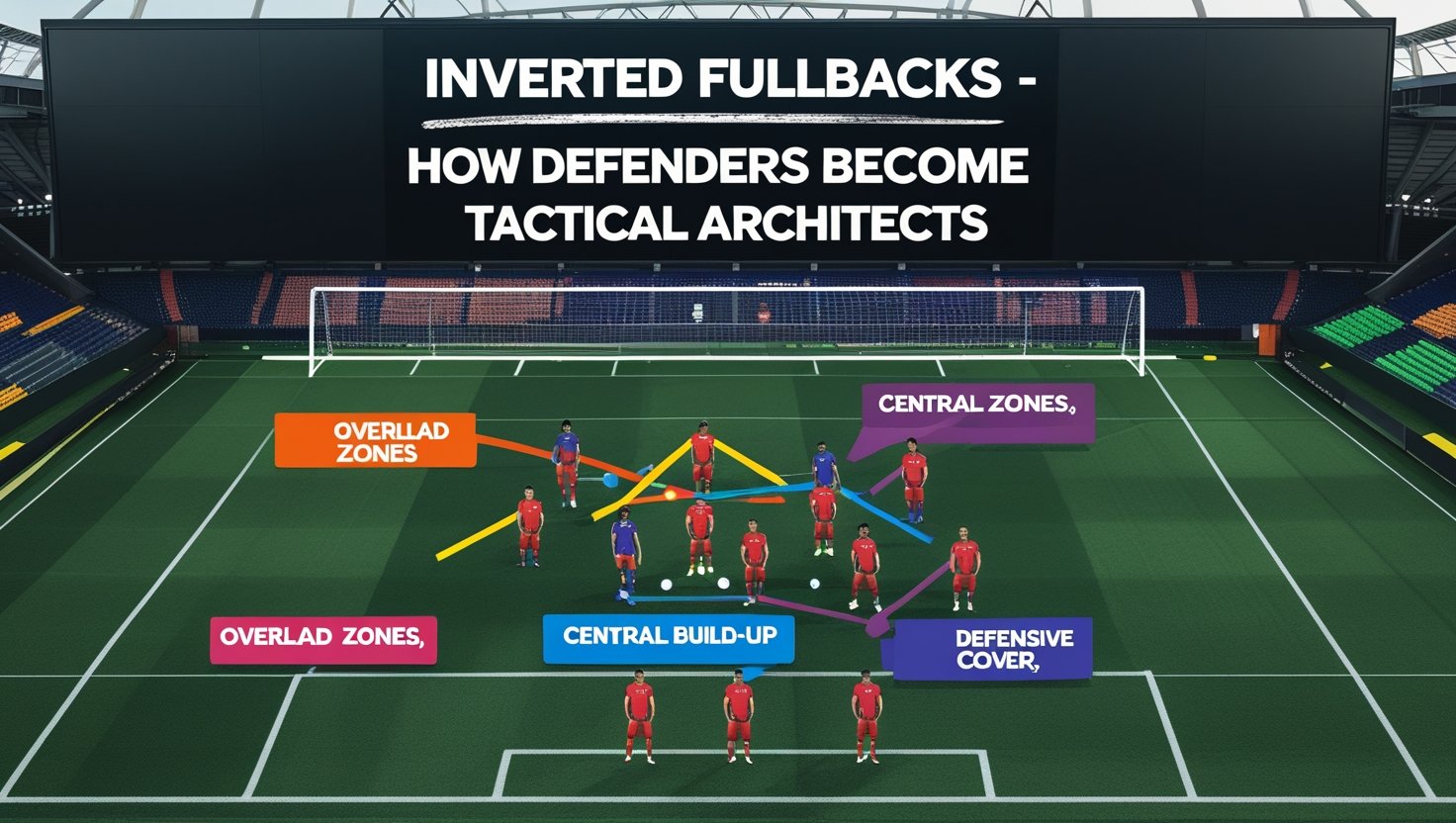
Step onto the pitch where defenders don’t just protect, they innovate. Inverted Fullbacks have redefined how modern football sees defense, transforming traditional roles into dynamic engines of creativity and control. Discover how these tactical architects turn the game upside down by blending defensive duties with the art of playmaking.
The Rise of the Inverted Fullback:
Gone are the days when fullbacks were solely tasked with defending the flanks. In today’s game, a new breed of defender is emerging, one that doesn’t merely guard but actively constructs play. Inverted Fullbacks have disrupted conventional roles by retreating into midfield regions during attacking phases, effectively becoming the unsung masterminds behind many modern tactical setups. This evolution has paved the way for defenders to morph into tactical architects, combining defensive reliability with creative distribution.
Historically, fullbacks occupied wide positions, tasked with defending the edges and providing overlapping runs for wingers. However, as teams embraced possession-based strategies and intricate passing networks, coaches began to demand more from their defenders. By venturing centrally when in possession, inverted fullbacks create numerical superiority in midfield and open avenues for innovative passing moves. This strategic inversion forces opponents to adjust, making it harder to predict and counter the flow of play. The transformation is not just about position, it’s a complete rethinking of the fundamental aspects of defense and attack, showcasing how every player on the pitch can be a pivotal contributor to overall team dynamics 2.
How Fullbacks Evolved into Tactical Architects:
The journey from conventional wide defenders to the modern-day inverted fullbacks is as much about evolution in tactics as it is about individual ingenuity. Coaches like Pep Guardiola and Johan Cruyff were among the first to experiment with this radical change, encouraging fullbacks to drift towards the center when their teams had the ball. This movement isn’t simply a positional change, it’s a tactical revolution that has reshaped formations and redefined game plans.
By positioning themselves centrally during offensive phases, inverted fullbacks contribute to a more fluid and unpredictable style of play. They serve as the critical link between defense, midfield, and attack, orchestrating transitions that often leave opponents scrambling to keep pace. Their ability to switch from a defensive to an attacking role with apparent ease has earned them the label of tactical architects.
This role requires not only technical skill and vision but also an in-depth understanding of spatial dynamics on the pitch. Their contributions go beyond individual brilliance, fostering a playing style that is both innovative and adaptable. As a result, teams can exploit central areas more effectively, turning defensive moments into creative opportunities.
Creating Midfield Overload with Inversion:
One of the most significant advantages of employing inverted fullbacks is the creation of numerical superiority in the midfield. When a fullback folds into a central role, they effectively transform the team’s shape, a move that provides extra passing options and allows for more intricate build-up play. This fluid positioning not only aids in retaining possession but also disrupts the opponent’s defensive organization.
Imagine a scenario where the opposition is set up to absorb pressure by crowding the middle. When your inverted fullback steps into the central zones, it overloads the enemy’s midfield, causing mismatches and opening lanes for incisive passes. This tactical adjustment is especially effective against teams that rely on rigid formations. The temporary central presence of a defender can cause confusion, forcing the opposition to readjust on the fly and creating room for attacking midfielders to exploit gaps.
Through continuous, intelligent movement and quick decision-making, these defenders contribute significantly to the team’s overall strategy, ensuring that every moment in possession is maximized for creativity and effectiveness. Their role accentuates the critical balance between defense and attack, making them pivotal to any modern football strategy.
Bridging Defense and Offense:
The real magic of inverted fullbacks lies in their ability to transition seamlessly between defense and attack. Their movement is characterized by a keen sense of timing and spatial awareness, qualities that enable them to act as the fulcrum of a team’s structure. When possession is won, these defenders naturally migrate to central areas, setting the stage for a quick counter-attack or a controlled build-up play.
This dual responsibility transforms them into essential liaisons who convert defensive actions into offensive opportunities. Their insight in reading the game means that as soon as a turnover occurs, they are already perfectly positioned to either disperse the ball with precision or shield the defensive third to allow teammates to reposition. In essence, inverted fullbacks reduce the gap between defense and midfield, providing a constant link that is crucial for maintaining team shape.
Their initiative contributes to more compact and effective defensive structures, and when attacking, their central positioning allows for more creative combinations. Their role demands an exceptional blend of athleticism, tactical cognition, and technical finesse, a combination that modern football increasingly values when teams strive for creative symmetry on the field.
Case Studies and Tactical Impact:
The transformative concept of the inverted fullback has already left its mark on some of the top teams around the world. Stars like João Cancelo, Oleksandr Zinchenko, and even figures like Trent Alexander-Arnold have showcased the numerous advantages of this role. In teams that emphasize ball possession and fluid movement, these defenders are more than just a defensive shield; they are key playmakers who drive the rhythm of the game.
For instance, during his tenure at Bayern Munich and later at Manchester City, Pep Guardiola’s innovative use of fullbacks reshaped the team’s tactical identity. By instructing his fullbacks to invert during build-up play, he effectively added layers of creativity to an already complex system of quick, short-passing football. The result was a style of play that was almost impossible to predict, with each transition engineered to combine defensive solidity with offensive prowess.
Such tactical experiments have influenced coaches at all levels, demonstrating that the inverted fullback is not merely a novelty but a critical component of modern football’s evolution. Their performance serves as a case study in the potential for defenders to control games and redefine traditional roles on the pitch.
The Next Frontier in Tactical Evolution:
As football continues to evolve in the digital age, where data analytics and video analysis have become integral to tactical planning, the role of inverted fullbacks is set to evolve further. Future trends point toward even greater integration of technology in tracking player movements, predicting match scenarios, and honing individual playing styles. Your inverted fullback might soon have access to real-time insights that help them decide the optimal moment to step into midfield or recover into a defensive posture.
The use of wearable tech and advanced performance metrics will allow coaches to tailor training sessions that enhance the unique demands of this role. This strategic evolution will likely lead to even more refined roles where defenders not only contribute to immediate gameplay but also serve as crucial data points for long-term tactical planning.
By understanding and anticipating game rhythms through technology, teams can experiment with new formations, create more flexible systems, and ultimately, design better strategies that blur the lines between traditional positions. The future of football is one where every player is versatile, and the inverted fullback is a prime example of how embracing change can yield extraordinary benefits on and off the pitch.
Conclusion:
Inverted Fullbacks are transforming the role of defenders into that of true Tactical Architects. By stepping into central midfield during possession and expertly bridging the gap between defense and attack, they empower teams to control play, overload the midfield, and build creative, dynamic strategies. Embracing this tactical innovation not only redefines defensive responsibilities but also heralds a future where every player is integral to shaping both the game plan and the final outcome.
FAQs:
Q1: What are inverted fullbacks?
They are defenders who move centrally during possession to help build attacks and create midfield overload.
Q2: How does inversion benefit a team’s tactics?
It provides numerical superiority in midfield, promotes creative build-up play, and disrupts the opponent’s defensive shape.
Q3: Who are some well-known inverted fullbacks?
Players like João Cancelo, Oleksandr Zinchenko, and Trent Alexander-Arnold have excelled in this role.
Q4: How does the inverted role improve transition?
By positioning themselves centrally, inverted fullbacks quickly convert defensive recoveries into attacking opportunities.
Q5: Is the inverted fullback role used by all teams?
Not universally; it’s mainly adopted by teams aiming for fluid, possession-based strategies.
Q6: What does it mean that defenders have become tactical architects?
It means they’re not just defending but are integral to shaping and initiating play across the pitch.